Mobile data remains one of the recurring expenses that Pakistani households manage carefully. While data packages have become more affordable over the past several years, monthly consumption has increased at an even faster rate. Streaming video, using social media apps, and staying connected throughout the day adds up. Consumers who want to keep their data bills under control are increasingly looking at how they use their smartphones, not just which package they buy.
One of the more effective strategies that has gained traction is the deliberate use of downloading tools to reduce streaming dependence. Rather than streaming the same content multiple times, users download it once and access it offline as needed. The logic is straightforward, but the financial impact is real and consistent for households that apply it systematically.
The Real Cost of Streaming in Pakistan
Streaming video is data-intensive in a way that most users underestimate. A standard definition video stream consumes roughly 700MB to 1GB per hour. High definition streaming pushes that to 3GB or more per hour. For a household where multiple family members are streaming content on separate devices throughout the day, a monthly data package can disappear faster than expected.
The pattern of rewatching content makes this worse. A child who watches the same cartoon five times, a student who replays a tutorial three times to follow along, or someone who shares a video clip with family members who each watch it on their own devices — all of these consume full data for each viewing. Downloading the content once eliminates the repeat data cost entirely.
Apps That Help Reduce Streaming Dependence
The category of apps designed to help users download video content for offline viewing has matured considerably. Early versions were often unreliable, limited in which platforms they supported, or cluttered with intrusive advertising. The better options available today have addressed most of these problems and offer a more streamlined experience.
Among the tools with a substantial user base in Pakistan, VidMate is one of the more established names. It supports downloading from a wide range of platforms, allows users to choose their preferred resolution before downloading, and processes downloads at reasonable speeds. For households trying to reduce how much data they consume on video content, having a reliable tool for offline downloading changes the daily usage pattern in a meaningful way.
When to Download and When to Stream
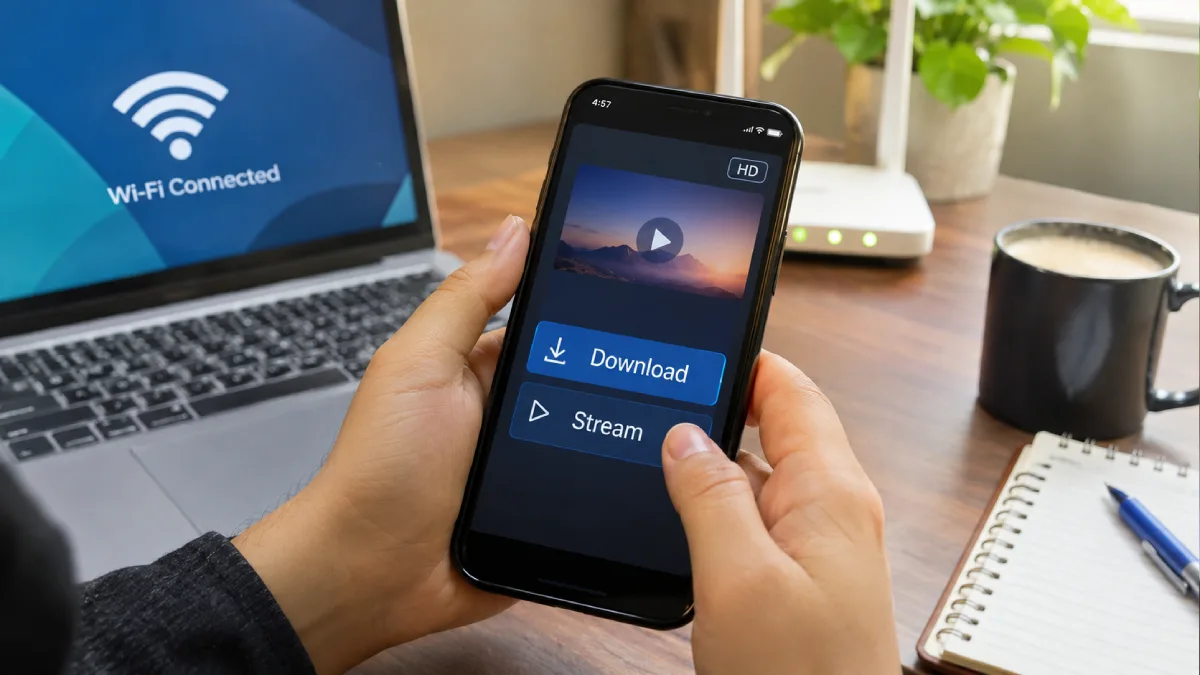
A practical approach to data management does not mean eliminating streaming entirely. It means being deliberate about which content gets streamed and which gets downloaded. Content you plan to watch once and move on from is a reasonable candidate for streaming. Content you expect to revisit, share with others, or watch in a location with poor connectivity is a better candidate for downloading.
The most efficient habit is to do your downloading during Wi-Fi availability. Home broadband or office Wi-Fi connections are not subject to the same data limits as mobile packages in most cases. Downloading a week's worth of content while connected to Wi-Fi and then consuming it offline throughout the week keeps mobile data usage minimal. This strategy works especially well for content that follows a predictable pattern, like weekly episodes, educational series, or regular tutorials.
The Connectivity Factor in Pakistan
Beyond data cost, network reliability is a separate reason why downloading makes practical sense in Pakistan. Even in major cities, mobile network quality varies significantly depending on location, time of day, and local congestion. During peak hours, streaming quality degrades noticeably in many areas. Downloaded content plays at the resolution you chose when you downloaded it, with no buffering, no quality drops, and no dependency on what the network is doing at that moment.
For users who commute regularly on public transport between Pakistani cities, offline content is not a convenience but a necessity. Train journeys, intercity bus routes, and travel through areas with limited coverage all become productive or enjoyable time when content is already downloaded and available locally on the device.
Educational Content and the Download Habit
Pakistani students and working professionals who rely on online video for learning have particular reason to build a download habit. Educational content is precisely the category most likely to be rewatched multiple times. A tutorial on a software skill, a lecture on a professional topic, or an explanation of a complex concept is rarely absorbed fully in a single viewing. Downloading it means being able to pause, rewind, and rewatch as many times as needed without any additional data cost.
This is especially relevant for students preparing for exams or professionals developing new skills outside of working hours, often in environments where connectivity cannot be guaranteed. Having the material available offline removes a variable that would otherwise interfere with effective study and practice.
Making the Shift: Small Changes With Measurable Results
The shift from streaming-first to download-first consumption does not require a dramatic change in behaviour. It is a small adjustment in habit — identifying the content you care about before you need it, downloading it in advance, and accessing it locally when you want it. For most Pakistani households, the result is a noticeable reduction in monthly data consumption without any reduction in the content they actually enjoy.
In a consumer environment where every rupee of household expenditure matters, tools and habits that reduce recurring costs without requiring a sacrifice in quality or enjoyment are genuinely valuable. Smarter app choices, applied consistently, represent exactly that kind of practical financial decision.