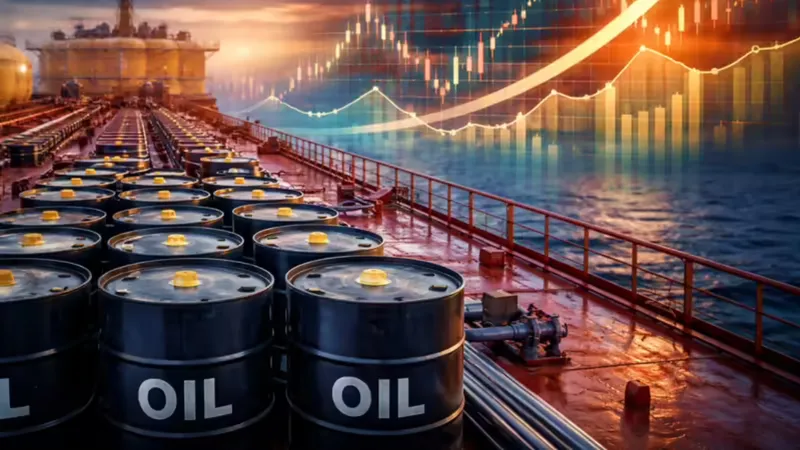
Global energy markets are in a price shock this week. Crude oil prices increased nearly 7% following a military confrontation between the US and Iran. With the Strait of Hormuz effectively under a blockade, traders are bracing for continued price instability.
Global oil prices have jumped by nearly 7 percent this morning as fresh military tensions in the Strait of Hormuz have agitated energy markets. Investors are reacting to a weekend of renewed conflict between the United States and Iran, which has once again put the world’s most critical oil shipping route at risk.
- Brent crude climbed to $96.30 per barrel.
- West Texas Intermediate (WTI) crude is trading near $90.22.
- British crude oil also saw a sharp rise, trading near $95.51 per barrel.
This sharp increase comes just days after the markets had briefly stabilized and raised hopes of a diplomatic breakthrough. The sudden reversal shows how fragile global energy supplies remain as long as the Strait of Hormuz, which handles nearly one-fifth of the world’s oil, remains a trigger point for conflict.
The "Touska" Incident
The current price spike follows a weekend naval confrontation in the Gulf of Oman. The US Navy destroyer USS Spruance seized an Iranian-flagged cargo ship, the Touska, accusing it of trying to evade a naval blockade. President Donald Trump confirmed the seizure, stating the ship was boarded by U.S. Marines after refusing warnings.
Iran has retaliated by reimposing strict controls on the waterway. Iran’s Revolutionary Guard (IRGC) has announced that the strait will remain closed to commercial traffic as long as the U.S. naval blockade on Iranian ports remains in place. This back-and-forth has ended the short-lived ceasefire, leading traders to rush to secure supply.
Peace Talks Under Pressure
While high-level delegations are reportedly in Islamabad to negotiate a lasting peace, the situation remains extremely fragile. The current ceasefire expires this week. Analysts warn that if it is not replaced by a lasting deal, energy markets could face even higher spikes. The deadlock over the inclusion of Lebanon in the peace talks remains a major obstacle.