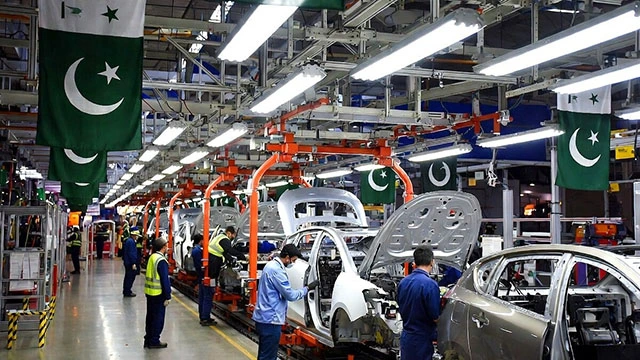
- The government has finalized a new five year auto policy. It offers a massive 30% reduction in vehicle prices starting July 1.
- The government will remove Additional Customs Duties (ACD) and Regulatory Duties (RD) to lower production cost.
- The policy will phase out petrol-powered car imports in favor of locally assembled electric and hybrid vehicles.
The federal government, with the help of Special Assistant Haroon Akhtar Khan, has finalized a new five-year auto policy (2026–30). Under the new National Tariff Policy, several high taxes that currently drive up car prices will be slashed 30%. Some may be removed entirely starting July 1, 2026.
Key changes to the tax structure include
- The Additional Customs Duty (ACD) and Regulatory Duty (RD) on many auto parts will be brought down to 0%.
- Customs duty on parts used to manufacture cars (CKD kits) will be cut to 5% for non-localized parts and 10% for localized components (except L6/L7 category vehicles). These concessional rates are expected to remain in place until June 30, 2028.
- The average total tariff for any domestically produced vehicle stays below 6%.
- The PAAPAM has suggested that electric bikes and rickshaws could be completely exempt from certain duties.
The "New Energy Vehicle" Revolution
The government is moving beyond just "Electric Vehicles" (EVs) to a broader category called New Energy Vehicles (NEVs). This now includes:
- Plug-in Hybrids (PHEVs)
- Range-Extended Electric Vehicles (REEVs)
- Fuel Cell Vehicles (FCVs)
To encourage people to switch, sales tax on hybrid vehicles will be cut by 50%, reducing it to just 9%. Furthermore, a tiny 1% customs duty has been proposed for parts specific to these new energy vehicles.
Phasing Out Petrol Imports
While local manufacturing is getting a boost, the government is getting tough on imported petrol-run cars. The new policy aims to gradually reduce and eventually end the import of gasoline powered vehicles.
The government plans to save about $222 million over five years on petrol imports by focusing on local assembly and moving to electric vehicles. This shift is also a direct response reliance to the global energy crisis.