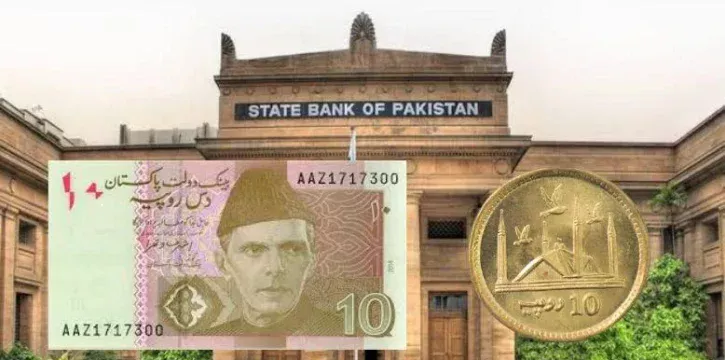
In a long-term currency management plan, the federal government is ready to withdraw the Rs. 10 currency note and introduce a coin to substitute it. The proposal would help in saving printing expenses and enhance efficiency. The government feels that the coins are a more durable and economical option than the paper money.
Reason Behind the Decision
According to official estimates, the Rs. 10 note has a short lifespan of only six to nine months, while a coin can remain in circulation for 20 to 30 years. Around 35 percent of all currency notes printed each year are Rs. 10 notes, creating a heavy financial burden. Printing, replacement, and handling costs currently reach Rs. 8 to 10 billion annually. By switching fully to coins, the government could save between Rs. 40 and 50 billion over the next decade.
Implementation Timeline and Process
The State Bank of Pakistan will be able to gradually eliminate the printing of Rs.10 notes in the coming three years. The current notes will be made to continue in circulation until they are automatically removed out of circulation. The 10 rupee coins have already been present in circulation since 2016 and will thus make the transition to the coin easier for the population and businesses.
Broader Impact and Global Context
The change also helps in the environmental objectives, as the use of paper and printing waste is minimized. The reason has already led to the replacement of low-value notes by coins in many countries, such as the United Kingdom, Canada, and Australia, amongst others. The shift is indicative of the attempts of Pakistan to streamline its currency system and cut long-term operation expenses.