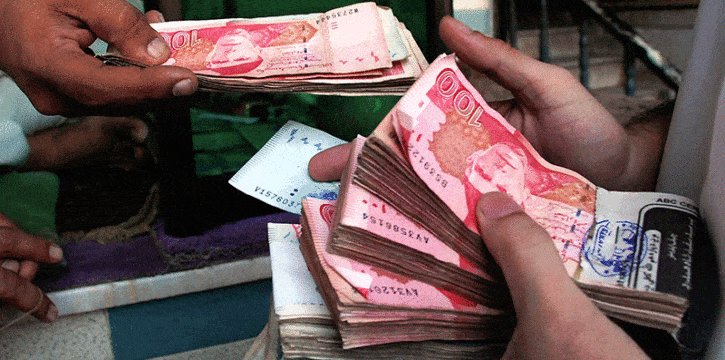
The Pakistani rupee rose for the 94th consecutive day against the US dollar. It closed at Rs. 279.72 per dollar in the interbank market on Wednesday. This marks a record run and reflects growing confidence in the currency.
The rupee also gained against the UAE dirham and Saudi riyal. It weakened slightly against the British pound and the euro. Market analysts said foreign inflows and stable demand supported the currency. Traders remain cautious as global market trends continue to influence exchange rates.
| Currency | 04-Feb 2026 |
03-Feb 2026 |
02-Feb 2026 |
Change +/– |
| USD | 279.7235 | 279.7518 | 279.7603 | 0.0283 |
| AUD | 196.8554 | 196.8893 | 194.2656 | 0.0339 |
| CNY | 40.3257 | 40.3289 | 40.2397 | 0.0032 |
| CAD | 205.1887 | 204.8563 | 204.9451 | -0.3324 |
| AED | 76.1567 | 76.1727 | 76.1667 | 0.016 |
| SAR | 74.5909 | 74.5985 | 74.5888 | 0.0076 |
| MYR | 71.2037 | 71.2653 | 70.9692 | 0.0616 |
| GBP | 383.6967 | 383.1621 | 382.8101 | -0.5346 |
| EUR | 330.9549 | 330.5548 | 331.6559 | -0.4001 |
A stronger currency has a profound effect on the national economy, as it reduces the prices of imported fuel. Such a change contributes to the reduction of inflation and alleviates consumer pressure. It also decreases the total volume of external debt. Stable rates boost investor confidence in local markets.
Financial analysts expect this trend to improve the trade deficit in the coming months. Continuous growth in value lowers import costs for raw materials. This trend remains a key indicator of improving national financial health.