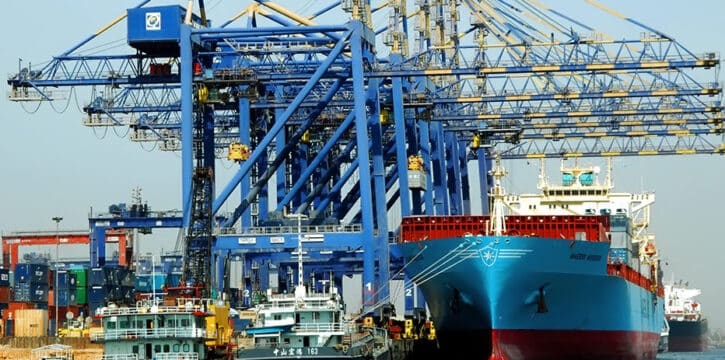
The strike of the Goods Transporters Alliance has now extended to eight days at Port Qasim and Port Karachi, which has had a serious consequence on the industries and supply chain in Pakistan.
The factories relying on imported goods to manufacture have stalled, and the owners of commercial vehicles, such as cargo trucks, two-wheelers, containers, and large trucks, claim that their supply lines are blocked.
Key sectors such as steel, cooking oil, cement, automobiles, imported coal, and petroleum are facing shortages. Since December 8, neither Sindh, Punjab, FBR, Port and Shipping, nor the economic ministries have intervened.
Meanwhile, Pakistan International Bulk Terminal Limited (PIBT) has signed a Supplemental Implementation Agreement with Port Qasim Authority. The agreement gives PIBT additional rights, concessions, and licenses to handle mineral commodities. PIBT can now manage storage, export, and handling of copper, gold, minerals, metals, and other natural commodities on a non-exclusive basis.
The company also signed an agreement with Reko Diq Mining Company (Private) Limited for handling its cargo concentrate. Incorporated in 2010, PIBT operates under a Build-Operate-Transfer (BOT) agreement for a coal and clinker/cement terminal. The 30-year agreement will transfer all assets to the Port Qasim Authority once it expires.
PIBT’s expanded operations will strengthen Pakistan’s mineral exports while the transport strike continues to challenge industries.