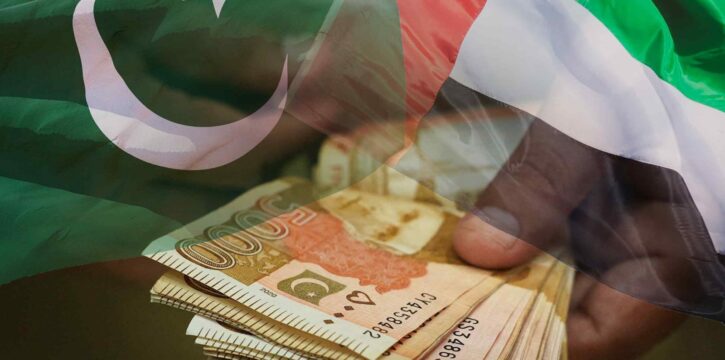
- Pakistan has successfully paid off a massive $4.85 billion in debt over the last 60 days.
- This includes the full $3.45 billion UAE loan and a $1.4 billion Eurobond repayment.
- Despite this massive repayment, the State Bank of Pakistan’s (SBP) reserves are holding strong above $15 billion.
- A crucial $3 billion financial package from Saudi Arabia helped keep the economy stable during these payments.
The country’s financial landscape faced a major stress test this spring as the government worked to settle significant international obligations. The total outflow of $4.85 billion included two primary parts.
- First, the government successfully paid off a $1.4 billion Eurobond that matured in early March.
- Following that, Pakistan settled its bilateral deposit account with the United Arab Emirates (UAE).
Pakistan has officially finished paying back the $3.45 billion debt it owed to the United Arab Emirates. This repayment was handled in two main stages: a $2.45 billion payment was made earlier in April, and the final $1 billion was sent on April 23, 2026.
How the Economy Stays Safe
Normally, paying out such a large amount of money so quickly would worry the markets and potentially hurt the value of the Pakistani rupee. However, this didn’t happen this time.
The main reason for this stability is the support from Saudi Arabia. Pakistan received a $3 billion financial deposit in two parts: $2 billion on April 15 and the remaining $1 billion on April 20. This Saudi support acted like a “safety net,” allowing Pakistan to pay off its debts to the UAE without emptying its own foreign exchange reserves.
How It Impacted Pakistan’s Reserves
Despite the high-pressure repayment schedule, the State Bank of Pakistan confirmed that the country’s foreign exchange reserves remain healthy. The SBP’s reserves are holding steady above $15 billion. When you count the money in commercial banks as well, the total reserves are sitting at over $20.5 billion.