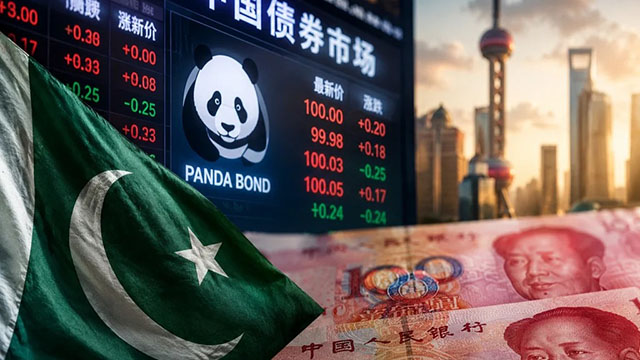
Pakistan has successfully entered the Chinese capital market for the first time, receiving a massive response from global investors who offered five times more money than requested at a historic 2.5% interest rate.
Pakistan has officially made its mark in the world’s second-largest financial market by selling its first-ever panda bonds (loans taken in Chinese yuan). According to Khurram Schehzad, Advisor to the Finance Minister, the results were far better than anyone expected.
In the first phase, Pakistan has obtained a loan of $250 million (1.75 billion yuan) by selling panda bonds. However, global investors were ready to lend five times more than that amount. In total, they offered a staggering $1.26 billion (8.8 billion Yuan).
Cheapest Loan in Pakistan’s History
One of the most shocking details of this deal is the incredibly low cost. Pakistan secured this loan at a fixed interest rate of just 2.5% per year. This rate is much lower than the 3.5% to 4% the government was expecting. It is also cheaper than the markup Pakistan pays on its installments to the IMF.
The loan comes with a three-year “sovereign guarantee,” meaning the government of Pakistan officially backs the repayment.
Changing How the World Sees Pakistan
This historic response shows that the image of Pakistan is changing in the global financial markets. Usually, international lenders set very tough conditions when Pakistan needs a loan. This time, however, the massive demand shows that global investors are now competing to lend to Pakistan on much easier terms.
This success is a proof that investors have high confidence in Pakistan’s economic future and its ability to pay back debts.
Future Plans for the Panda Bond
The Ministry of Finance has confirmed that this $250 million is just the first step. The government plans to raise a total of $1 billion through panda bonds over the next two years.
Because there is so much competition among investors, experts believe Pakistan will be able to get even larger loans at even lower interest rates in the coming phases.