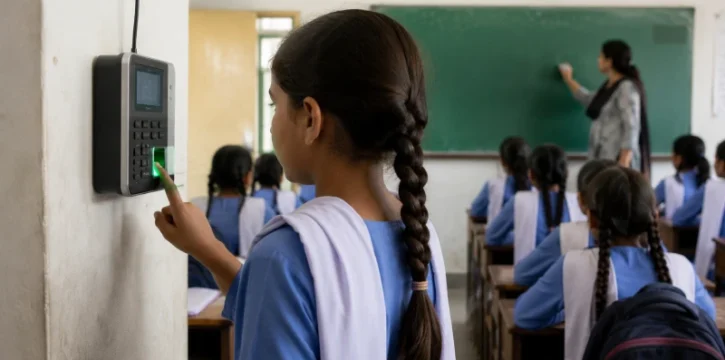
Sindh has expanded its digital student attendance system to 3,647 government schools. The system, called SAMRS, tracks attendance, flags long absences, and keeps academic records in one digital profile for each student.
The provincial government wants every government school in Sindh connected to SAMRS by April 2027. As of August 27, 3,481 schools were already linked, and that number has since climbed to 3,647.
How SAMRS Started
SAMRS stands for the Student Attendance Monitoring and Redress System. Sindh’s School Education and Literacy Department built it under the SELECT Project, with support from the World Bank and the Global Partnership for Education.
Chief Minister Sindh, Syed Murad Ali Shah launched SAMRS in November 2025, starting with 600 schools across 12 districts. At that early stage, education officials reported that 99% of those schools were logging attendance through the system, and 92% had started using its redress process for absent students. The Sindh Cabinet then approved the SAMRS Policy 2026 in March, clearing the way for this wider rollout.
What Each Student Gets
Every student on SAMRS gets a digital profile. It holds their attendance record, academic results, exam history, and any school transfers, all in one place.
Students will get a unique Student ID and a QR code to scan, which schools use to manage and update every student records. Instead of a system-generated ID, students are now linked through their NADRA-verified B-Form number, so each child’s identity in the system is confirmed and accurate.
Parents Get Alerts for Long Absences
SAMRS is built to catch students who stay away from school for extended periods, not just single missed days. When that happens, parents get an alert by SMS, email, or WhatsApp.
Education Minister Syed Sardar Ali Shah has described the goal as catching absenteeism early, before it turns into a student dropping out. The system also produces daily, monthly, and yearly attendance reports, and can issue certificates digitally.
Built for Areas With Weak Internet
Some parts of Sindh don’t have steady internet access, so SAMRS includes an offline mode. Schools in these areas can still use geofenced attendance and offline facial recognition to log students, and the data syncs once a connection is available.