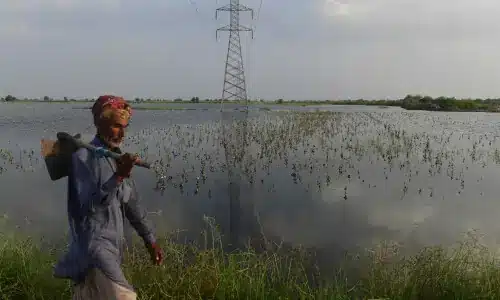
- Sudden rises and falls in Chenab River water are affecting wheat and other crops in Punjab.
- Farmers report lack of water in canals and have to buy water from tube wells.
- Pakistan’s Foreign Office has formally asked India for clarification under the Indus Waters Treaty.
Pakistan’s Punjab farmers are facing problems as the flow of the Chenab River changes suddenly. The Marala-Ravi link and other canals are affected, leaving wheat and other crops without enough water.
A senior official from the Punjab Irrigation Department said the changes are caused by Indian control of the river through hydropower projects. At times, water is released without prior notice, while on other occasions, water is held back for several days, reducing the flow, he added.
Daily monitoring by WAPDA shows that the Marala headworks inflows and outflows from December 9 to 18 were irregular.
- On December 9, inflow was 10,100 cusecs and outflow 3,800 cusecs.
- By December 10, inflow dropped to 6,900 cusecs and outflow to 1,500 cusecs.
- Between December 11 and 17, outflows stopped completely despite inflows ranging from 1,800 to 3,800 cusecs.
Local farmer Ameer Langra said farmers in Kabirwala’s Mauza Sahib Langra struggled to water wheat. They had to buy water from tube wells. “Canals sometimes get too much water suddenly; other times they get none,” Langra said. He added that recent floods damaged many tube wells, worsening the situation.
Farmers and Authorities Respond
Pakistan Kissan Ittehad President Khalid Khokar called India’s actions a violation of the Indus Waters Treaty. He urged the government to take the matter to India and international forums.
The Foreign Office confirmed that Pakistan has written to India for clarification about the abrupt variations in Chenab River flow. FO spokesperson Tahir Hussain Andrabi said such changes at a crucial time for crops threaten food security, farmers’ livelihoods, and the economy.
The Indus Waters Treaty of 1960 allocates three western rivers, including Chenab, to Pakistan and three eastern rivers to India. Andrabi said any unilateral changes in river flow violate the treaty and international law.
Pakistan remains committed to peaceful resolution but will protect its water rights, Andrabi added.