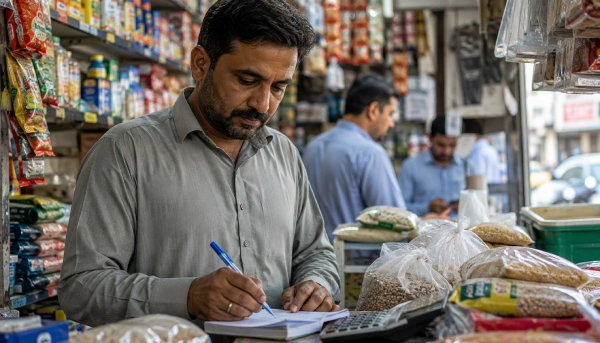
The government launched a new tax scheme for small traders on Wednesday, called the Fixed Tax Asaan Scheme. Traders with yearly sales under Rs200 million (about $720,585) can now pay just 1% tax on their declared sales, instead of dealing with the regular tax system.
Here’s what the scheme actually means for traders:
- Tax rate: 1% of your declared yearly sales
- Minimum tax: Rs25,000 (about $90), even if your sales are lower
- No Point of Sale (POS) machine required
- Available through a new mobile app, open to traders already registered for tax and those who aren’t yet
- Completely optional. You can still stick with the regular tax scheme if that suits you better
Why the Government Is Doing This
Pakistan’s tax collection compared to the size of its economy is among the lowest in the world, sitting at around 10%. The IMF has been pushing the government to raise this figure. In the fiscal year that just ended, FBR collected a record Rs11.7 trillion (about $42.2 billion) in taxes, up 26% from the year before, though it fell just short of its Rs11.9 trillion target. This year’s target is even higher, over Rs15 trillion (about $53.96 billion).
State Minister for Finance Bilal Azhar Kayani said the scheme and its app were built with direct input from traders themselves. Finance Minister Muhammad Aurangzeb confirmed the scheme is optional, so traders can stay on the regular tax system if they prefer it. FBR Chairman Rashid Mahmood Langrial said he expects the scheme to make tax payments simpler for small traders.
Kashif Chaudhry, president of the Central Association of Traders, welcomed the move but reminded traders that paying tax under this scheme doesn’t remove the need to file a return, skipping that part still counts as a violation.
Alongside this scheme, Pakistan is also building an AI-based system for its tax department, meant to cut down direct contact between taxpayers and tax officials.